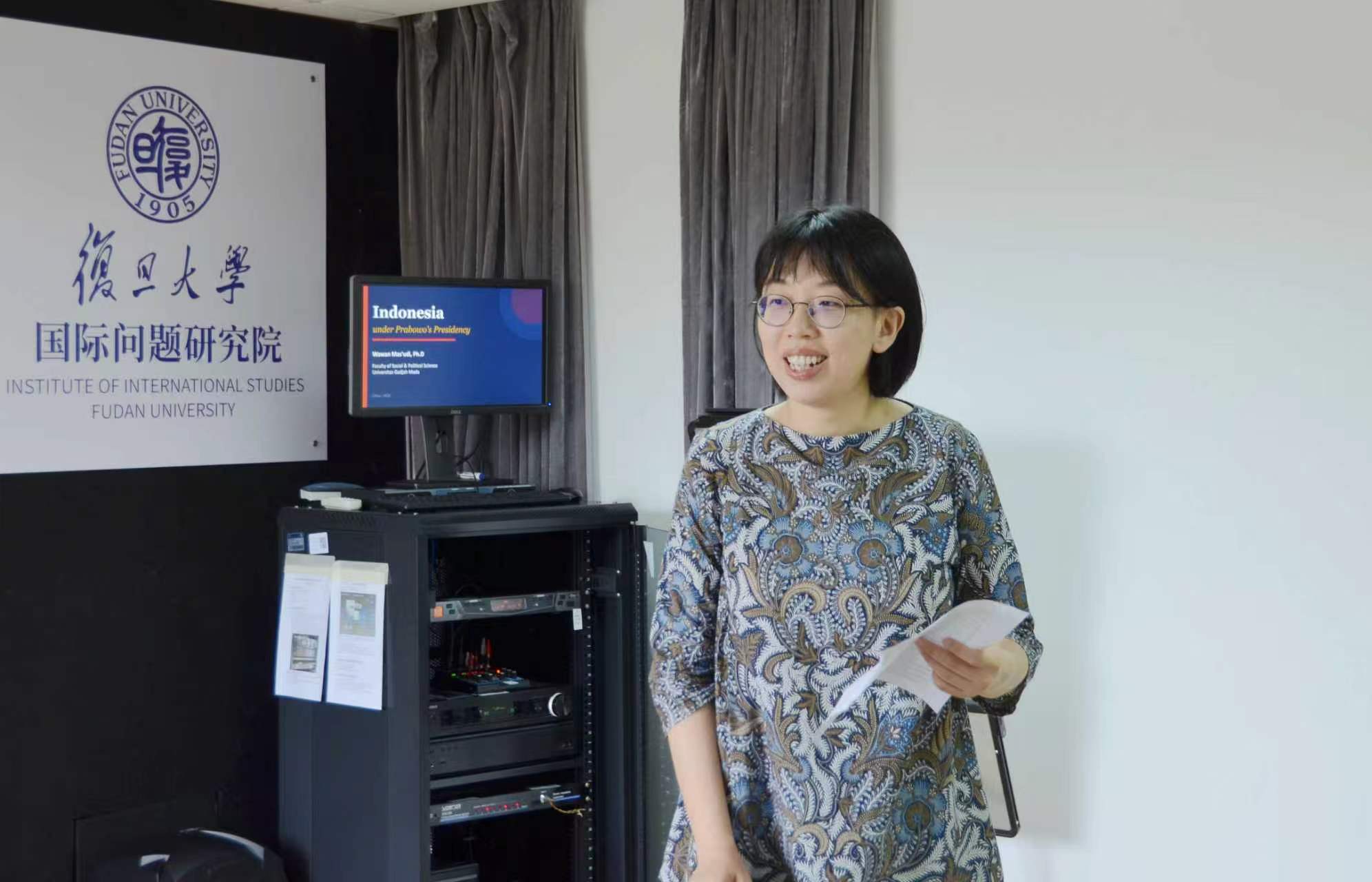
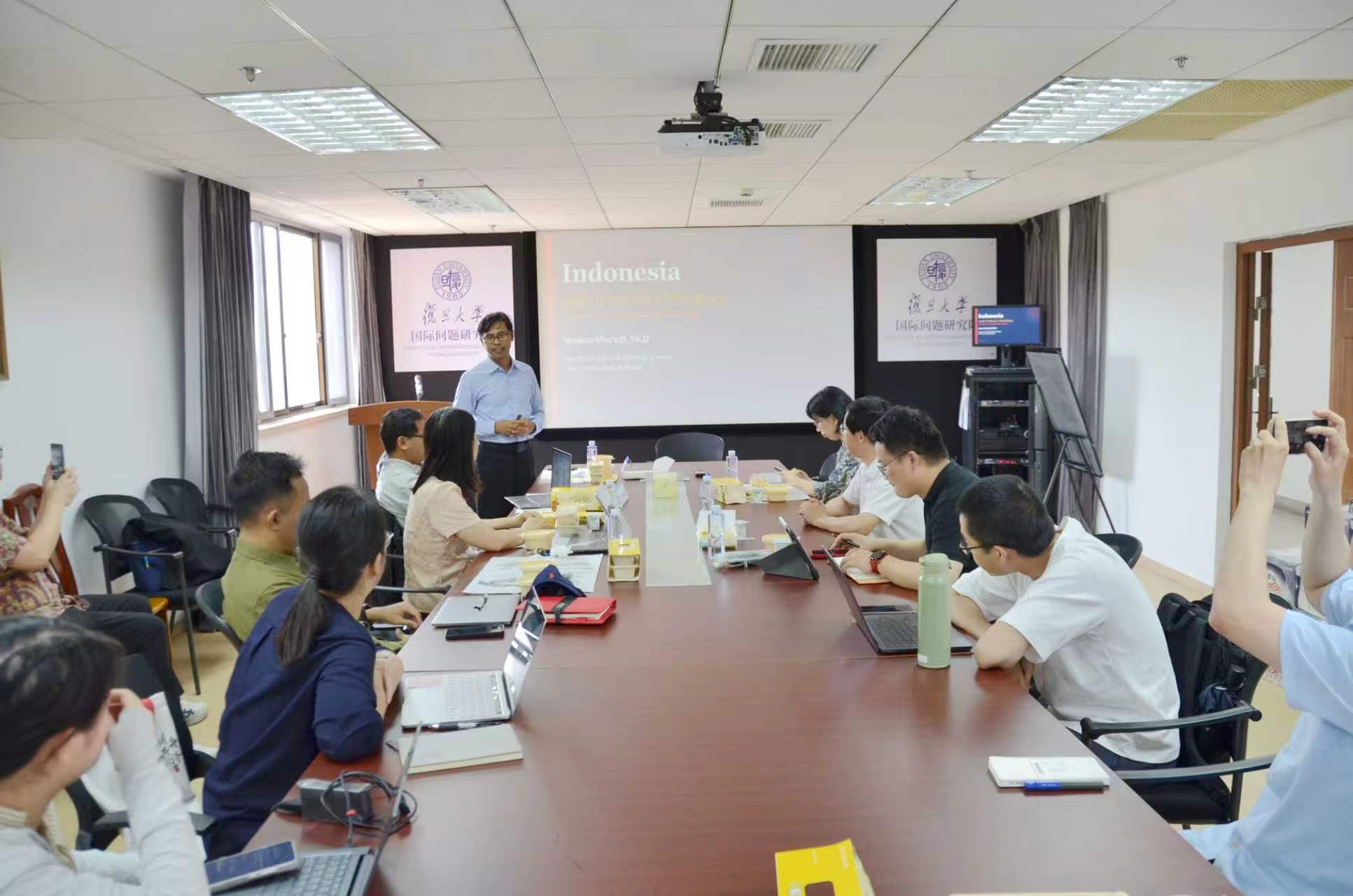
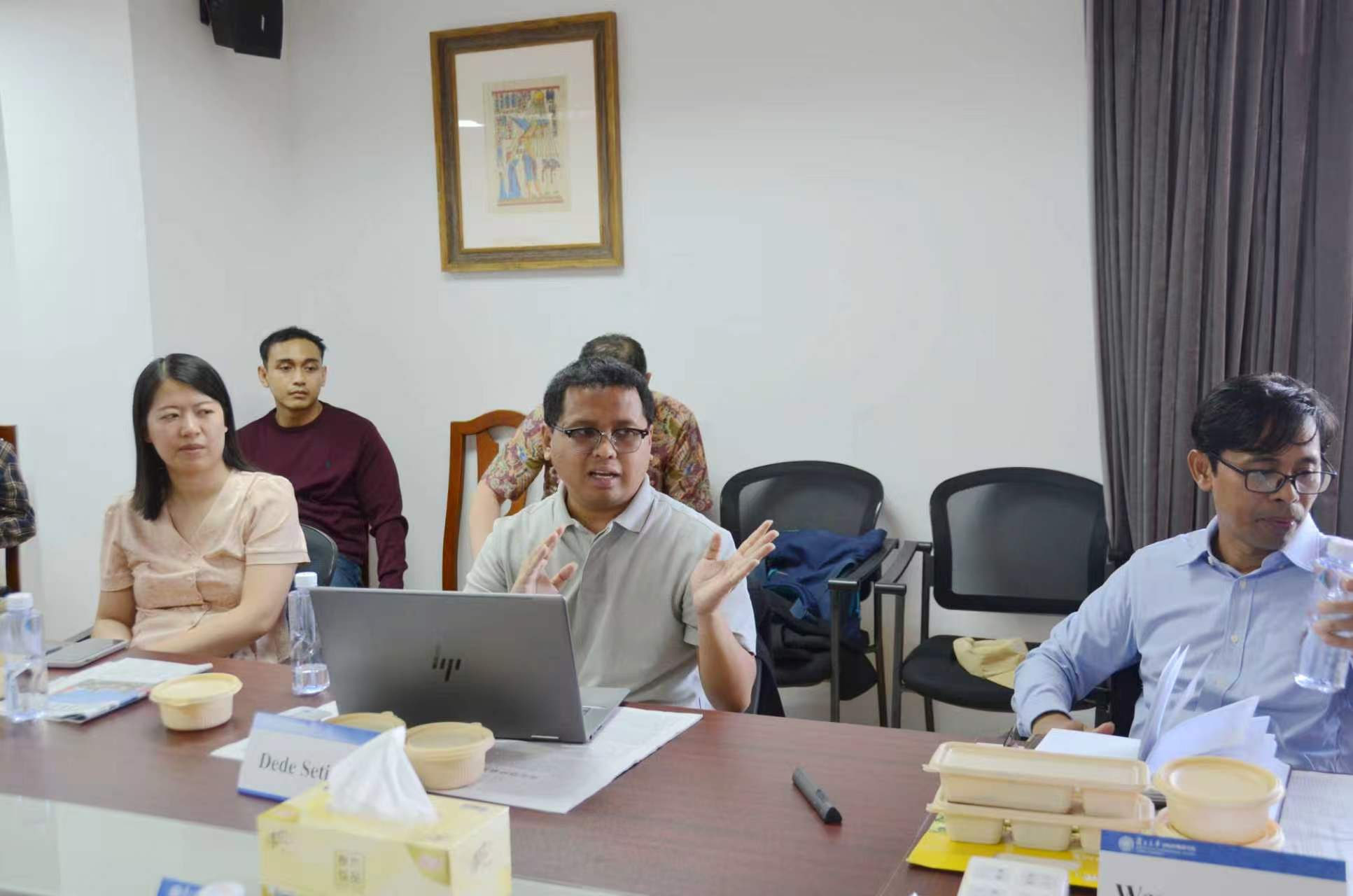
At noon on June 5, 2026, the 94th Youth Academic Workshop on International Studies of Fudan University (YAWIS Fudan) was successfully held in Room 324, Wenke Building, Handan Campus, Fudan University. The seminar, titled “Indonesia under President Prabowo: Ambitions for State-Led Development Amid Turbulent Geopolitical Relations,”featured Senior Lecturer Wawan Mas’udi, Dean of the Faculty of Social and Political Sciences at Universitas Gadjah Mada (UGM), Indonesia, and a prominent scholar of Indonesian politics. The seminar provided an in-depth analysis of Indonesia’s political development, economic governance, social policies, and foreign strategy under the administration of President Prabowo Subianto. (Guest Speaker Senior Lecturer Wawan Mas’udi) The event was moderated by Dr. Xue Song, Associate Professor at the Institute of International Studies, Fudan University (IIS Fudan). Dr. Dede Setiono, Assistant Professor in the Department of Public Policy and Management at Universitas Gadjah Mada and Visiting Scholar at the Fudan Development Institute, served as the discussant. Faculty members and students from Fudan University and other institutions participated in the academic exchange. (Dr. Xue Song moderates the 94th YAWIS Fudan) Dr. Wawan Mas’udi reviewed Indonesia’s political development since the democratic transition. He noted that while Indonesia has advanced democratization and decentralization reforms, it has also developed a distinctive political system of its own. Throughout this process, the evolution of party politics, central–local relations, and state governance capacity has collectively shaped the key features of contemporary Indonesian politics. He argued that Prabowo’s victory in the 2024 presidential election reflects significant changes in Indonesia’s political landscape. Factors such as the high public approval enjoyed by the Jokowi administration, innovations in political communication in the digital media era, and the consolidation of the governing coalition all contributed to his electoral success. Dr. Mas’udi then introduced the Prabowo administration’s governing platform, Asta Cita (Eight Missions). The programme focuses on areas such as food and energy security, national defence, and economic development, reflecting the government’s emphasis on economic growth, state capacity building, and social equity. Discussing the characteristics of the new administration, he argued that Prabowo is pursuing a development path centred on strengthening state capacity, characterized by a nationalist orientation, the expansion of social welfare programs, state-led development, and a more proactive and pragmatic foreign policy. On the one hand, the government seeks to improve public services through initiatives such as the Free Nutritious Meals Programme and universal health check-ups. On the other hand, it aims to enhance the state’s guiding role in economic transformation through industrial down-streaming policies, the establishment of the Danantara sovereign wealth fund, and the implementation of major national projects. (The 94th YAWIS Fudan in progress) Dr. Mas’udi further analyzed the broad-based coalition that underpins the Prabowo administration. He noted that the new government has incorporated individuals from diverse backgrounds, including political parties, technocrats, business circles, and regional political forces. This arrangement helps strengthen policy coordination and political stability, while also placing greater demands on governance efficiency and policy implementation.In discussing policy initiatives, he highlighted several flagship programs, including the Free Nutritious Meals Programme (MBG), the Red-and-White Village Cooperative Programme, and strategies aimed at achieving food and energy self-sufficiency. Turning to foreign policy, Dr. Mas’udi observed that the Prabowo administration has continued Indonesia’s long-standing tradition of an “independent and active” foreign policy while adopting a flexible and pragmatic approach in an increasingly complex international environment. By deepening cooperation with major powers such as China and the United States, Indonesia seeks to preserve its strategic autonomy. Regarding China–Indonesia relations, he noted that political mutual trust has continued to deepen, economic and trade cooperation has expanded, and collaboration in high-speed rail, green energy, and the electric vehicle industry has emerged as new highlights of bilateral relations. In his commentary, Dr. Dede Setiono remarked that Dr. Mas’udi’s analysis not only revealed the internal logic of Prabowo’s state-led development strategy but also highlighted the institutional tensions that Indonesia continues to face after democratic transition. He suggested that the central challenge of Indonesia’s political development lies in balancing developmental performance, social welfare provision, and democratic governance. (Discussant Dr. Dede Setiono) During the discussion session, faculty members and students engaged in lively exchanges on topics including Indonesia’s party politics and the prospects for China–Indonesia cooperation. Dr. Mas’udi responded to participants’ questions and further elaborated on the practical challenges Indonesia faces in balancing national development objectives with democratic governance. (Group photo of the 94th YAWIS Fudan)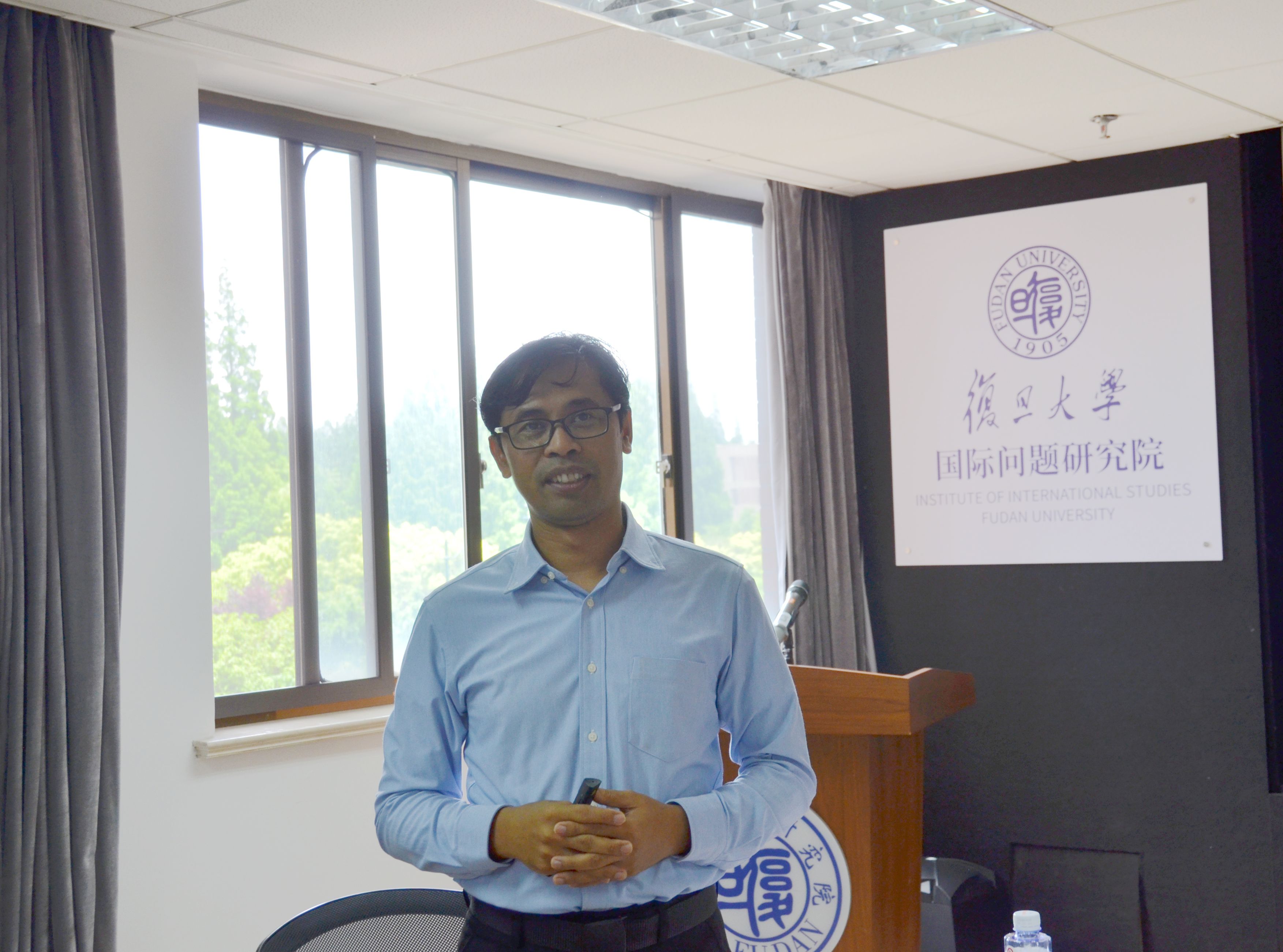
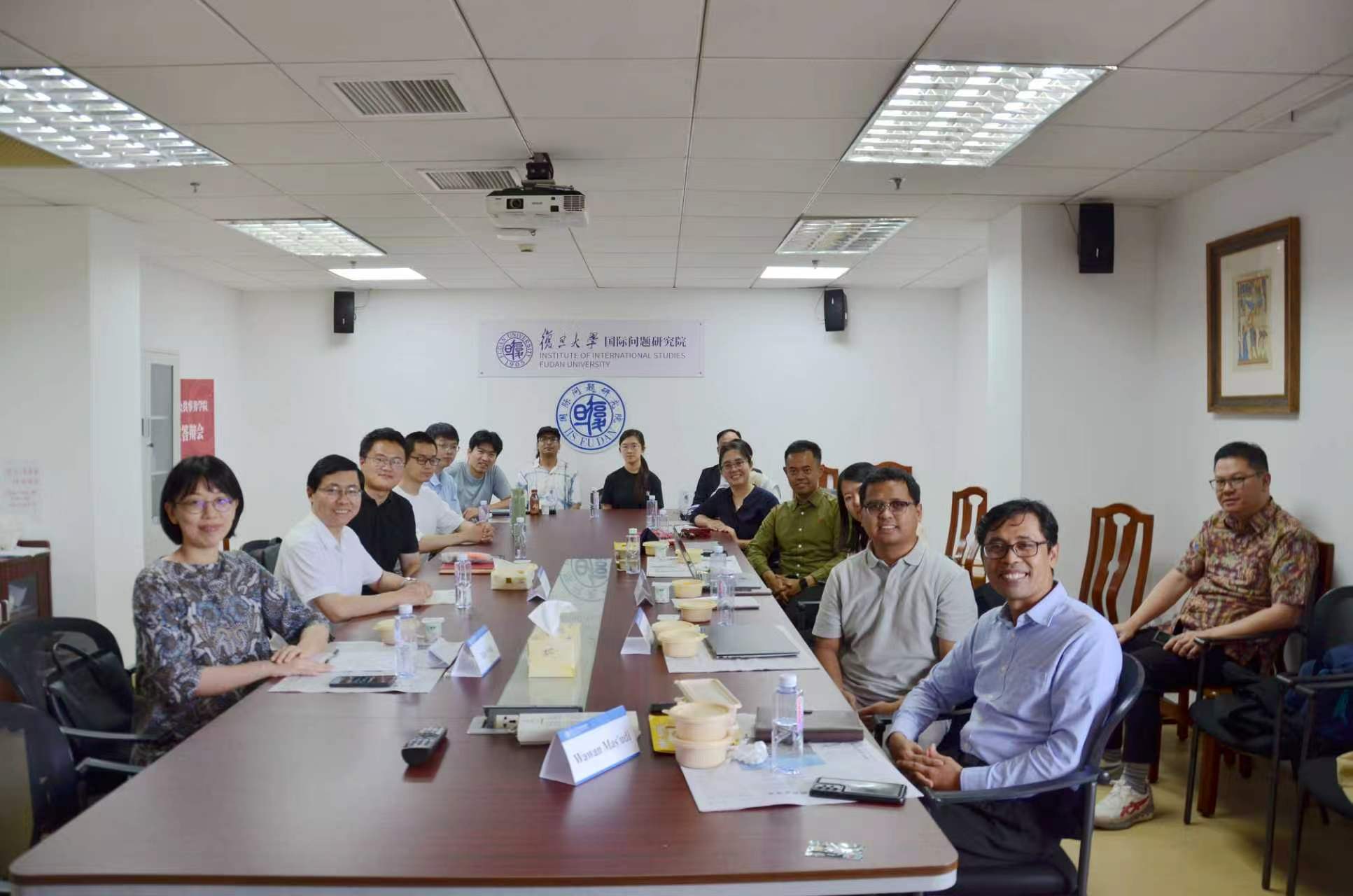
Dr. Wawan Mas’udi Discusses State-Led Development and Geopolitical Challenges under President Prabowo at the 94th YAWIS Fudan
发布时间:
2026-06-05
访问次数:
10
