(Source:Global Times,2026-10-29)
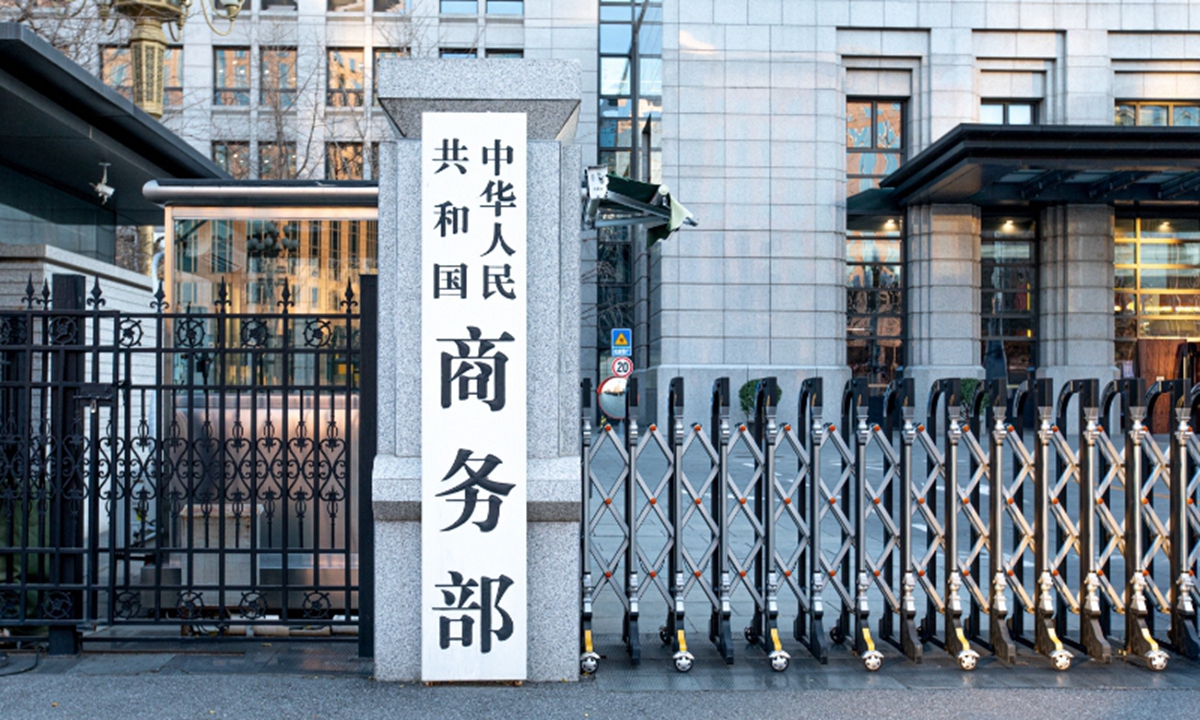
China will take all necessary measures to defend its legitimate rights and interests, if the EU persists in imposing discriminatory restrictions against Chinese products, a spokesperson of the Chinese Ministry of Commerce (MOFCOM) said on Thursday.
The official was responding to reports that the EU was exploring the possibility of extending the trade understanding reached with China regarding hybrid vehicles to other sectors, such as chemicals.
Imposing artificial restrictions on normal trade likely violates World Trade Organization (WTO) rules, and such measures not only fail to enhance the competitiveness of EU industries but also increase the burden on downstream sectors, thereby fueling inflation within the EU and undermining the security and stability of global industrial and supply chains, Huang Ling, the MOFCOM spokesperson, said at a press briefing.
Huang noted that the second meeting of the China-EU trade and investment consultation mechanism recently yielded positive progress and a number of consensuses, demonstrating that both sides possess not only the willingness but also the ability and wisdom to properly address economic and trade differences through dialogue and consultation.
China has repeatedly emphasized that it is not the source of the problems facing the EU, but rather a partner in finding solutions, and China is willing to strengthen dialogue and consultation with the EU, continue exploring ways to address each other's economic and trade concerns, and promote more balanced and forward-looking development of China-EU trade, Huang said.
"However, China firmly opposes any protectionist practices involving the abuse of trade defense instruments. If the EU persists in taking discriminatory restrictive measures against Chinese products, China will take all necessary measures to firmly safeguard its own interests and the legitimate rights and interests of Chinese enterprises," Huang said.
The remarks come as the EU considers expanding trade restrictions to additional sectors amid concerns over competition from Chinese imports.
According to Reuters, EU trade ministers discussed on October 23 possible measures involving sectors including chemicals and machinery.
The latest developments also follow a series of China-EU economic and trade consultations aimed at addressing bilateral differences through dialogue.
During the second meeting of the China-EU trade and investment consultation mechanism held in Beijing on October 8 and 9, the two sides reached consensus on 16 points covering trade and investment, export controls, intellectual property rights and WTO reform.
Among the outcomes, the two sides reached an understanding on hybrid vehicle trade consistent with WTO rules, agreed to explore possible tariff reductions on certain goods, and pledged to continue addressing market access concerns.
Trade barriers are unlikely to address the structural challenges facing European manufacturers, including relatively high energy costs and the need for technological upgrading, Jian Junbo, director of the Center for China-Europe Relations at Fudan University's Institute of International Studies, told the Global Times on Thursday.
Jian warned that such restrictions would amount to protectionist measures targeting a wide range of Chinese products and could spark trade tensions, which China firmly opposes.
He added that restrictions on Chinese products could also have unintended consequences for the EU economy.
At the same time, the recent progress in China-EU economic and trade consultations demonstrates that dialogue remains a viable way to manage differences. Jian said that rather than expanding restrictive measures to more industries, both sides have opportunities to address legitimate trade concerns through negotiations, maintain stable supply chains and explore new areas of mutually beneficial cooperation.