(Source:Global Times,2025-11-25)
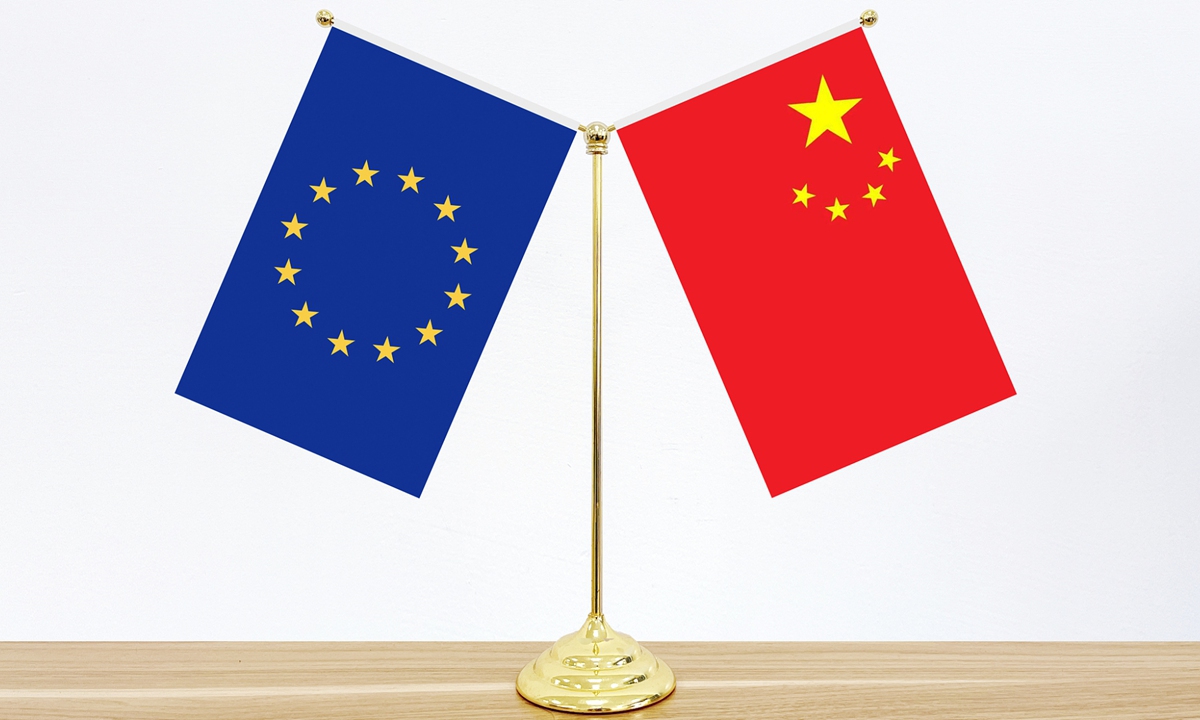
China EU Photo:VCG
China and European countries have ramped up economic and trade exchanges lately. Chinese Vice Minister of Commerce and Deputy China International Trade Representative Ling Ji on Tuesday met with Timo Jaatinen, Finnish Permanent Secretary of the Ministry of Economic Affairs and Employment. The two sides exchanged views on China-Finland and China-EU economic and trade relations, according to a release on the Ministry of Commerce (MOFCOM) website on Tuesday.
Ling noted that this year marks the 75th anniversary of China-Finland diplomatic relations. Under the strategic guidance of both countries' leaders, bilateral economic cooperation has deepened, with steady growth in trade and parallel progress in two-way investment. He expressed hope that the Finnish government will foster an open, fair, and non-discriminatory business environment for Chinese enterprises investing and operating in Finland.
Chinese Commerce Minister Wang Wentao held a phone call on Monday with Peter Szijjarto, Minister of Foreign Affairs and Trade of Hungary, and discussed China-Hungary and China-EU economic and trade cooperation, according to another release on the MOFCOM website on Tuesday.
Meanwhile, Chinese Vice Premier He Lifeng, the Chinese lead person of the China-France High Level Economic and Financial Dialogue, held a video call with French Minister of Economy, Finance and Industrial, Energy and Digital Sovereignty Roland Lescure on Monday at the latter's request. During the call, they exchanged views on China-France economic and financial cooperation as well as issues of common concern, the Xinhua News Agency reported.
He Lifeng stated that China is willing to work with France to deepen exchanges and cooperation in economic and financial fields, promote new achievements through cooperation, and inject more stability and positive energy into the world economy. For his part, Lescure stated that France is willing to strengthen pragmatic cooperation with China in economic and financial fields such as trade and investment, and promote greater progress in bilateral economic and trade relations, according to the Xinhua report.
Chinese Minister of Commerce Wang Wentao on November 11, held a video call with Katherina Reiche, Germany's economy, and energy minister, during which they exchanged views on bilateral and China-Europe trade issues.
At the recently concluded 9th China-Germany Automotive Conference in Changchun, Northeast China's Jilin Province, German business leaders and industry representatives called for deeper cooperation with China's automotive sector, advocating mutual engagement while voicing opposition to unilateralism and protectionist measures.
Chinese experts said that recent intensive high-level talks have pointed the direction for further deepening China-EU economic and trade cooperation and injected new momentum into bilateral exchanges.
They also noted a strengthened economic dialogue communication mechanism between Chinese and European officials in economic and trade fields will reinforce institutionalized channels of dialogue and enable them to function effectively and pragmatically, Jian Junbo, director of the Center for China-Europe Relations at Fudan University's Institute of International Studies, told the Global Times on Tuesday.
Against the backdrop of rising protectionism, it is more than ever necessary for China and Europe to enhance economic and trade cooperation, Jian added.
A stable China-EU economic relationship remains essential for mutual growth and the stability of global supply chains, Zhou Mi, a senior researcher at the Chinese Academy of International Trade and Economic Cooperation, told the Global Times on Tuesday.
However, according to a Financial Times report on Monday (local time), the EU is planning to tighten its foreign investment rules to ensure that Chinese companies do not gain advantages from the bloc's open market without generating benefits for local workers and sharing technology. Zhou urged the EU to refrain from adopting artificial restrictions against Chinese investments.
China-EU cooperation is market-driven and win-win. Amid a sluggish global economic recovery and rising protectionism, deeper China-EU cooperation enhances collective resilience against external risks, Zhou said.
Practical collaboration in fields including finance, industry, agriculture, transport, and information technology is generating stronger synergies for addressing pressing global challenges and economic instability, ultimately injecting more certainty into the international economy, Zhou said. The EU should not let political, irrational, or even ideological factors sway China-EU economic and trade relations. Rather, it should let the markets play a decisive role in economic cooperation, he added.
Jian said that although some voices in Europe have increasingly emphasized competitive pressures from Chinese industries, the core momentum for economic and trade collaboration with China remains intact.
The European business community has emphasized market connections with China and realized that decoupling or de-risking from China is simply not feasible, Jian said. A notable example is German carmaker Volkswagen, which continues to prioritize seamless market ties with China and is pushing for deeper integration rather than decoupling.
China reclaimed its position as Germany's largest trading partner in the first nine months of 2025, according to data from the Federal Statistical Office (Destatis) released on November 19, Xinhua reported. Germany's total trade with China reached 185.9 billion euros ($215.13 billion) from January to September, up 0.6 percent year-on-year, Destatis said.
China and the EU are each other's second-largest trading partners. The trade relationship between China and the EU demonstrated resilience in 2024 despite some frictions, as bilateral trade reached $785.8 billion, a modest 0.4 percent year-on-year rise.