On the afternoon of November 13, 2025, the 83rd Youth Academic Workshop on International Studies (YAWIS Fudan) was held at the Center for American Studies (CAS), Fudan University. The session featured Professor Liu Feng, Vice Dean of the School of Social Sciences and Professor in the Department of International Relations at Tsinghua University. The event was chaired by Professor Wu Xinbo, Dean of the Institute of International Studies (IIS Fudan) and Director of CAS, and was attended by nearly 60 faculty members and students.
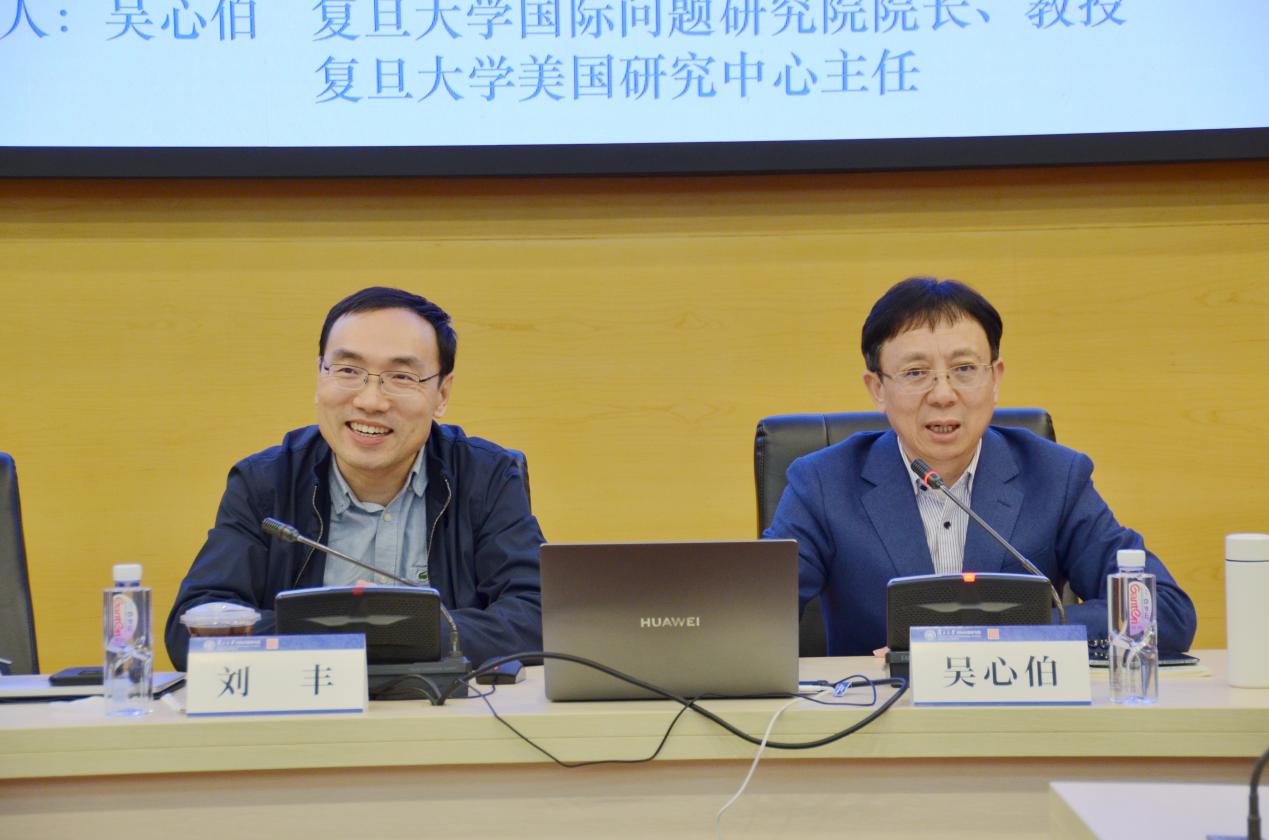
(Professor Liu Feng delivering the lecture; Professor Wu Xinbo chairing the session)
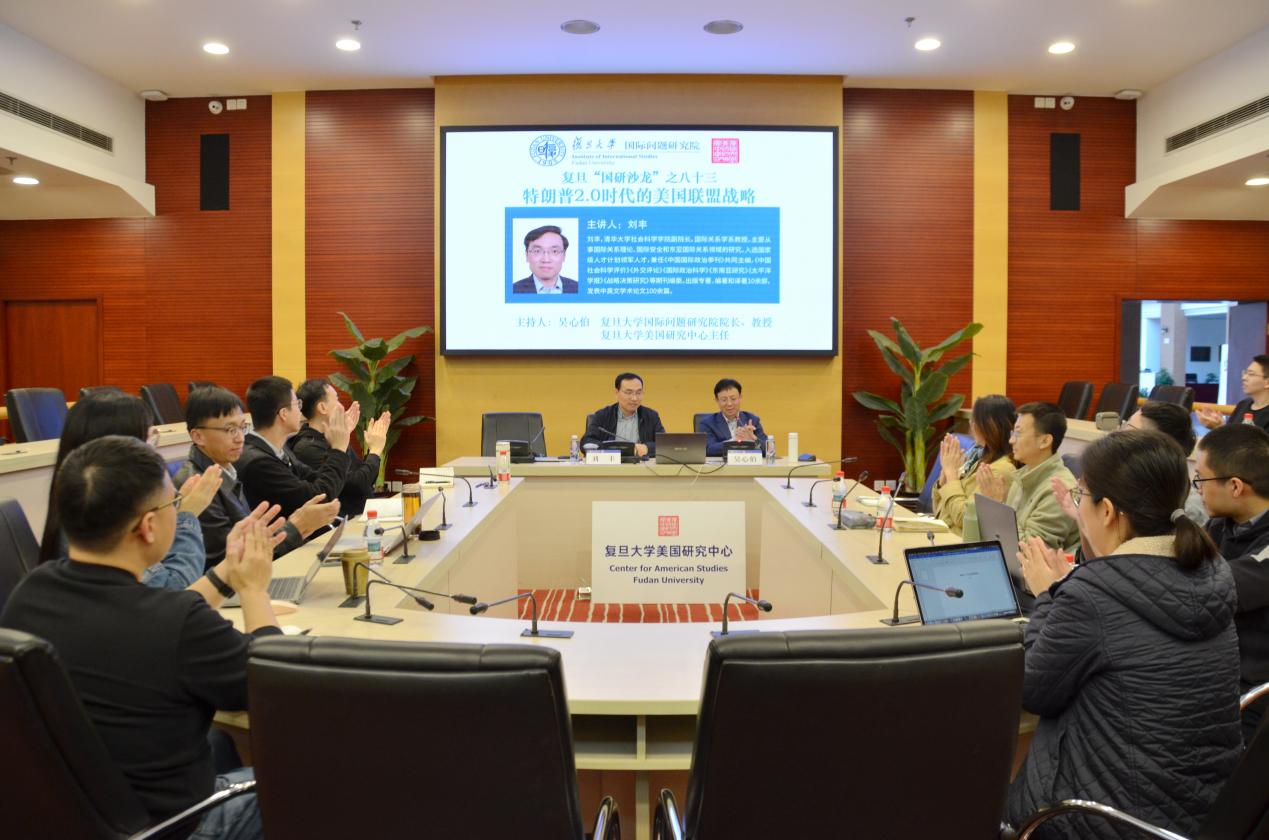
(Professor Liu Feng gives the keynote at the 83rd YAWIS)
Professor Liu began his lecture by observing that alliances remain a cornerstone of U.S. global and regional strategy. Reviewing early developments under Trump’s second term, he noted that Washington’s security commitments have shown significant variation across regions—for example, unwavering support for Israel, growing pressure on European allies, and explicit guarantees to the Philippines and other Asia-Pacific partners.
He argued that these differentiated approaches reflect the administration’s efforts to reconcile two competing strategic goals: “America First” and “American leadership.” At their intersection lies a shared objective—containing China.
According to Professor Liu, Trump’s alliance strategy rests on two main tools. First are pressure mechanisms—such as tariff leverage and burden-sharing demands—aimed at pushing allies to contribute to U.S. economic revitalization and align with Washington’s China policy. Second are selective indulgence and security guarantees, intended to retain U.S. presence in strategically vital regions and deter adversaries.
From a theoretical standpoint, Professor Liu emphasized that the U.S. alliance system is inherently hierarchical. While this hierarchy was once veiled by a framework of “benevolent hegemony,” it has become more overt in what he described as an era of “predatory hegemony.” He suggested that Trump’s policies are not simply pragmatic adjustments but signal deeper structural changes that challenge the limits of the existing alliance order.
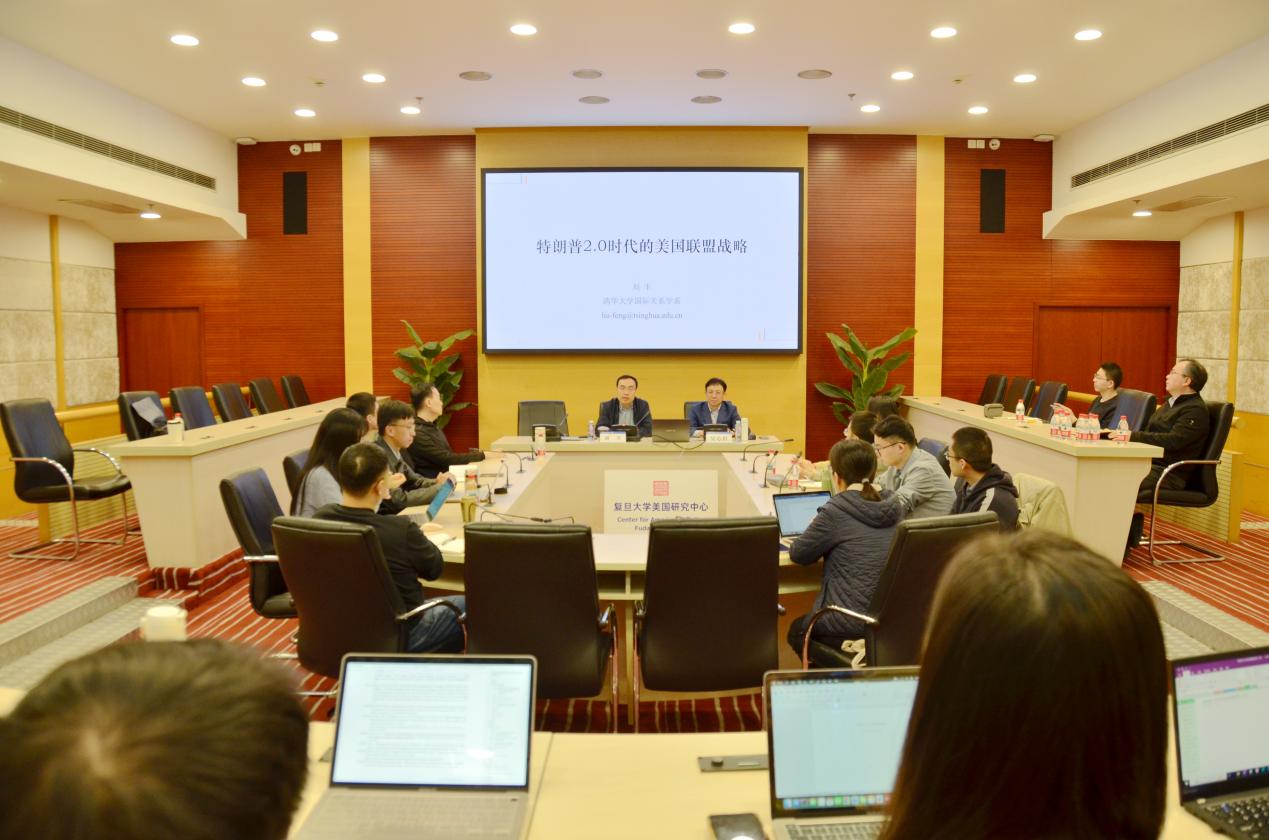
(Scene of the 83rd YAWIS Fudan)
In his concluding remarks, Professor Wu Xinbo thanked Professor Liu for his insightful presentation and praised the clarity of his analytical approach. He encouraged young scholars—especially Ph.D. students—to begin with precise, well-defined research questions, noting that a clear question naturally leads to a coherent analytical framework.
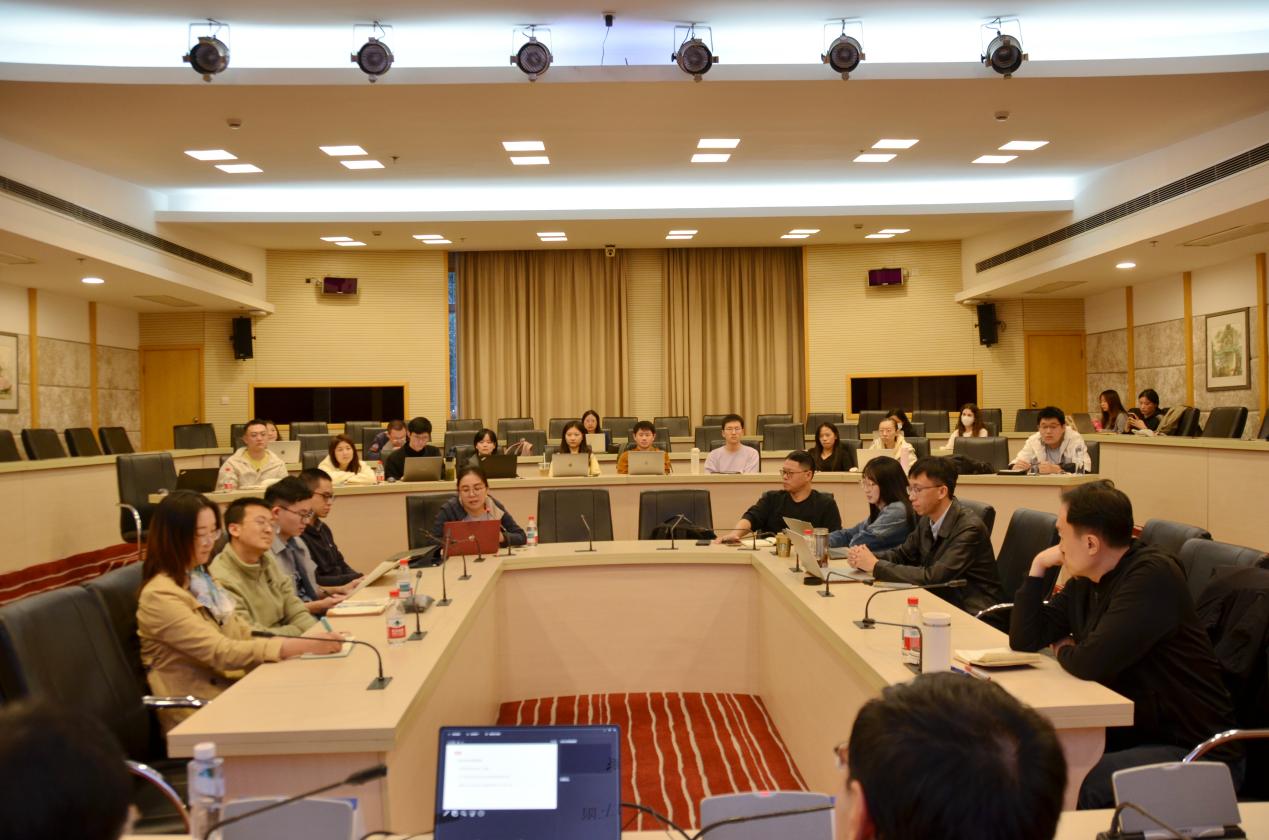
(Scene of the 83rd YAWIS Fudan)
The Q&A session featured dynamic discussion, with participants raising questions on U.S.–Israel relations, U.S.–Russia relations, the U.S.–ROK alliance, the Taiwan issue, and comparisons between the Biden and Trump administrations’ alliance strategies. The dialogue was active, thoughtful, and engaging.