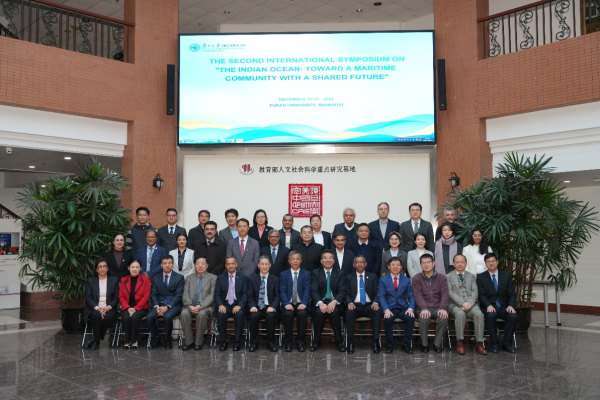
From December 10 to 11, 2025, the Institute of International Studies, Fudan University (IIS Fudan) successfully hosted the Second International Symposium on “the Indian Ocean: Toward a Maritime Community with a Shared Future” in Shanghai. The conference brought together over 50 government officials, scholars, and think tank representatives from more than ten countries for in-depth discussions on security, development, and governance in the Indian Ocean region. The goal was to build cooperative consensus and explore pathways to mutual benefit.
In his opening remarks, Ma Yugang, Vice President of Fudan University and Academician of the Chinese Academy of Sciences, emphasized that peace and prosperity in the Indian Ocean are central to the long-term interests of all littoral states. He noted that China’s concept of a “community with a shared future at sea” offers vital ideas for addressing shared regional challenges.
Zhou Hanmin, Member of the Standing Committee of the Chinese People’s Political Consultative Conference (CPPCC) and President of the Shanghai Public Diplomacy Association, spoke about Shanghai’s transformation from a port and shipping center to a comprehensive maritime city. He highlighted the multidimensional foundations of maritime competitiveness—ranging from marine industries and technological innovation to port logistics, ecological sustainability, and maritime spatial planning. Zhou also underscored the emerging importance of the blue carbon economy and positioned Shanghai as a future hub for maritime governance knowledge in Asia.
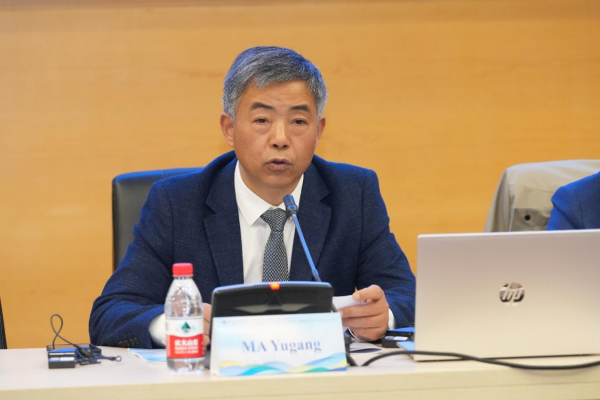
[Vice President Ma Yugang delivering opening remarks]
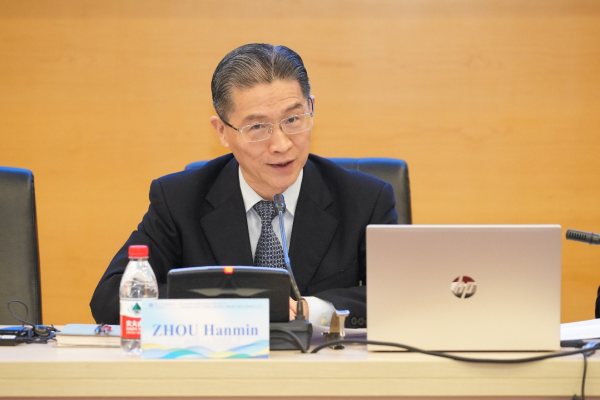
[Mr. Zhou Hanmin delivering remarks]
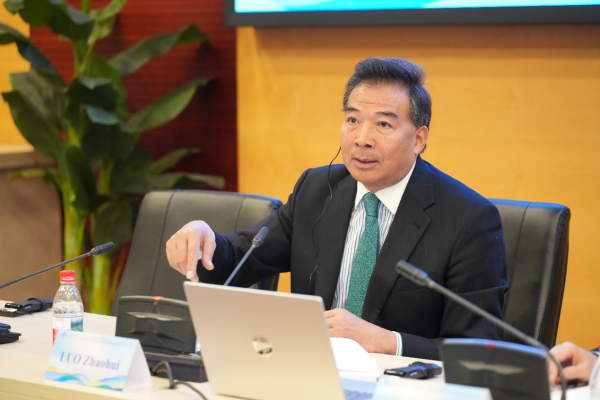
In his keynote address, Luo Zhaohui, CPPCC Member and former Chairman of the China International Development Cooperation Agency, reviewed China’s concrete efforts to advance the vision of a maritime community with a shared future, including Belt and Road blue economy cooperation, the China–Indian Ocean Region Blue Economy Development Cooperation Forum, and the Blue Talents Program. He emphasized that amid intensifying geopolitical competition and climate challenges, nations must transcend zero-sum thinking and collectively build the Indian Ocean into a region of peace, prosperity, sustainability, and civilizational exchange.
The opening ceremony was chaired by Professor Wu Xinbo, Dean of IIS Fudan, who stressed that dialogue platforms such as this symposium play a crucial role in clarifying misperceptions and demonstrating China’s vision of cooperative engagement in the Indian Ocean region.
The two-day conference featured six thematic sessions, providing a comprehensive view from macro trends to concrete areas of cooperation. The first session, “the Great Transformation of the Indian Ocean,” explored shifting strategic dynamics across the region. Discussions also focused on “the Bay of Bengal in the Indian Ocean” as a subregional hotspot, emphasizing its geopolitical significance and cooperation potential.
Subsequent panels addressed “Seeking Strategic Connection Between the Indian Ocean and Pacific Oceans,” highlighting trans-regional security and development interactions, and “Cooperation in the Global South and the Indian Ocean,” which explored development-focused multilateral initiatives.
Further sessions delved into the “East African Coast of the Indian Ocean,” providing historical and cultural context, while a session on “China and the Indian Ocean” examined China’s evolving regional role from strategic, economic, and governance perspectives. Discussions traversed historical and contemporary, strategic and practical, and regional and global dimensions—offering rich insights into how the Indian Ocean can evolve as an open, inclusive, and cooperative maritime space.
To deepen international participants’ understanding of China, select guests joined field visits to Shanghai and Guangzhou following the conference. These itineraries bridged past and present, and connected China’s maritime heritage with its modern development. From industrial innovation to cultural landmarks of the Maritime Silk Road, participants experienced firsthand the vitality of China’s maritime civilization and its contemporary openness.
Through open dialogue and multi-dimensional exchange, the symposium served as a valuable intellectual platform for navigating the complex dynamics of the Indian Ocean and promoting a future of inclusive cooperation. The outcomes and shared understandings from the event will provide important reference points for building a peaceful, balanced, and mutually beneficial maritime order in the region.
2025年12月10日至11日,由复旦大学国际问题研究院主办的第二届“构建印度洋命运共同体”国际会议在上海成功举行。本届研讨会汇聚了来自十多个国家的五十余位官员、学者、智库代表,围绕印度洋地区的安全、发展、治理展开深度对话,旨在凝聚合作共识,探寻共赢路径。
会议合影
复旦大学副校长马余刚院士在开幕致辞中指出,印度洋的和平与繁荣关乎所有沿岸国家的根本利益,中国倡导的“海洋命运共同体”理念为应对共同挑战提供了重要思路。全国政协常委、上海公共外交协会会长周汉民在发言中指出,上海正从港航主导型城市向综合型海洋城市跃迁,并系统阐述了以海洋产业、科技、港航、生态、空间等多维度构成的海洋城市综合竞争力。他特别强调蓝碳经济的重要性,并认为上海有潜力成为亚洲海洋治理的知识生产与创新中心。
复旦大学副校长马余刚院士发言
全国政协常委、上海公共外交协会会长周汉民发言
全国政协委员、国家国际发展合作署原署长罗照辉在主旨演讲中系统阐述了中国践行“海洋命运共同体”理念的系列行动,包括共建“一带一路”蓝色经济合作、设立中国—印度洋地区蓝色经济发展合作论坛、实施“蓝色英才计划”等。他强调,面对地缘竞争与气候挑战并存的复杂局面,各方应超越零和博弈,共同将印度洋建设成为和平、繁荣、可持续的文明交融之海。复旦大学国际问题研究院院长吴心伯教授主持开幕式并表示,对话平台有助于澄清误解,彰显中国在印度洋寻求合作共赢的根本逻辑。
全国政协委员、国家国际发展合作署原署长罗照辉发言
会议设置的六个专题,贯穿了从地区宏观变局到具体领域合作的全景视角。首节“印度洋的大变局”从整体格局切入,剖析了地区面临的深刻演变与战略态势。与此同时,“印度洋的孟加拉湾”作为关键次区域受到集中关注,探讨其地缘动态与合作空间。议题进一步延伸至“寻求印度洋与太平洋的战略连接”与“全球南方与印度洋的合作”,分别审视跨洋地缘互动与发展导向的多边路径。
此外,“印度洋的东非沿岸”环节提供了历史与文化的纵深视角,而“中国与印度洋”专题则从多个维度探讨了中国与地区的互动关系。为期两天的系列研讨,覆盖了从整体到局部、从当代到历史、从战略到务实合作的多重维度,为构建开放、包容、合作、共赢的印度洋未来汇聚了多元智慧。
为增进国际与会者对中国的直观了解,会后部分外宾在上海及广州进行了实地参访。精心设计的参访路线贯通古今、连接经济与人文,从中国悠久的航海历史到现代制造业的发展活力,从近代史的重要印记到海上丝绸之路的文化传承,使外宾在行走与观察中,多维度感受中国深厚的海洋文明底蕴、当代发展成就以及持久开放的姿态。
本届研讨会通过多层次、多角度的坦诚交流,为理解印度洋的复杂动态、探索合作共赢路径搭建了高效的思想平台。会议汇聚的智慧与共识,将为推动构建开放包容、合作共赢的印度洋地区秩序提供有益参考。