On April 15, 2026, a celebration of the China-Brazil Year of Cultural Exchange and the launch of the Chinese edition of The Brazilian People were held at Fudan University. Darcy Ribeiro, the book's author, was one of Brazil's greatest thinkers of the twentieth century, and the work is regarded as a national reader for understanding the soul of Brazil. The event was organized by the Center for Latin American Studies at Fudan University's Institute of International Studies (IIS) and the Consulate-General of Brazil in Shanghai, with co-organizers including the Darcy Ribeiro Foundation, Fudan's School of International Relations and Public Affairs (SIRPA), the Fudan Development Institute, the Office of International Cooperation and Exchange, and the Department of Spanish in the College of Foreign Languages and Literature.
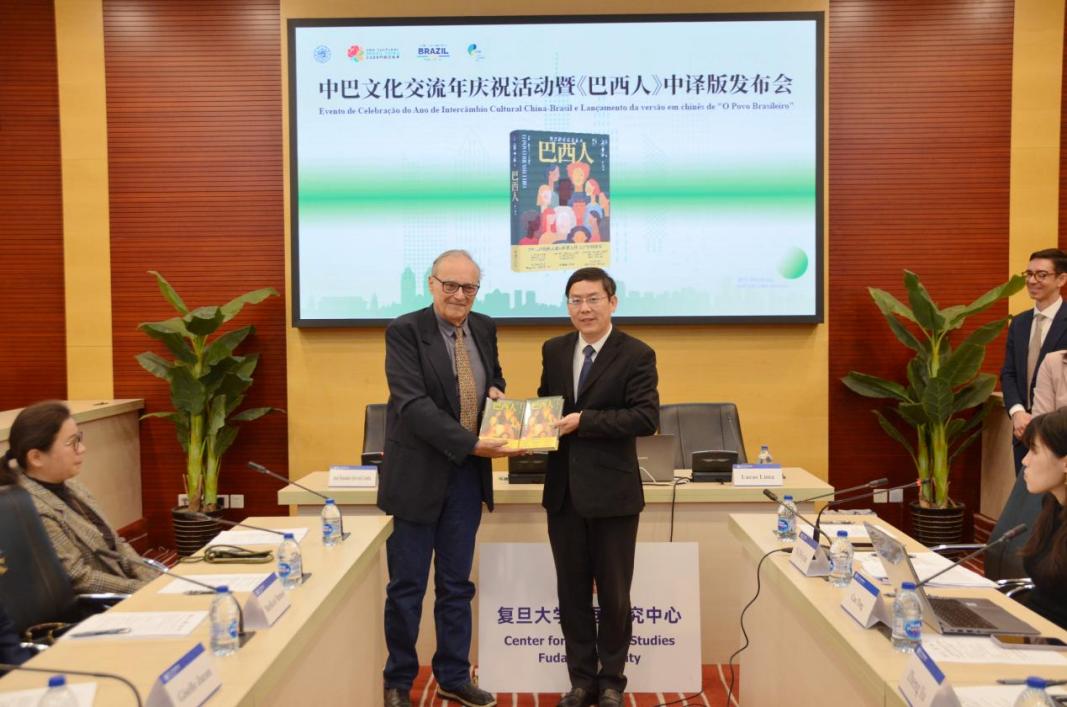
Qi Huaigao, Vice Dean of the IIS, and Lucas Lima, Cultural Consul of Brazil in Shanghai, delivered opening remarks. José Ronaldo Alves da Cunha, President of the Darcy Ribeiro Foundation, then presented the IIS with Portuguese and Chinese editions of The Brazilian People. The event was moderated by Cao Ting, Director of the Center for Latin American Studies and Associate Research Fellow.
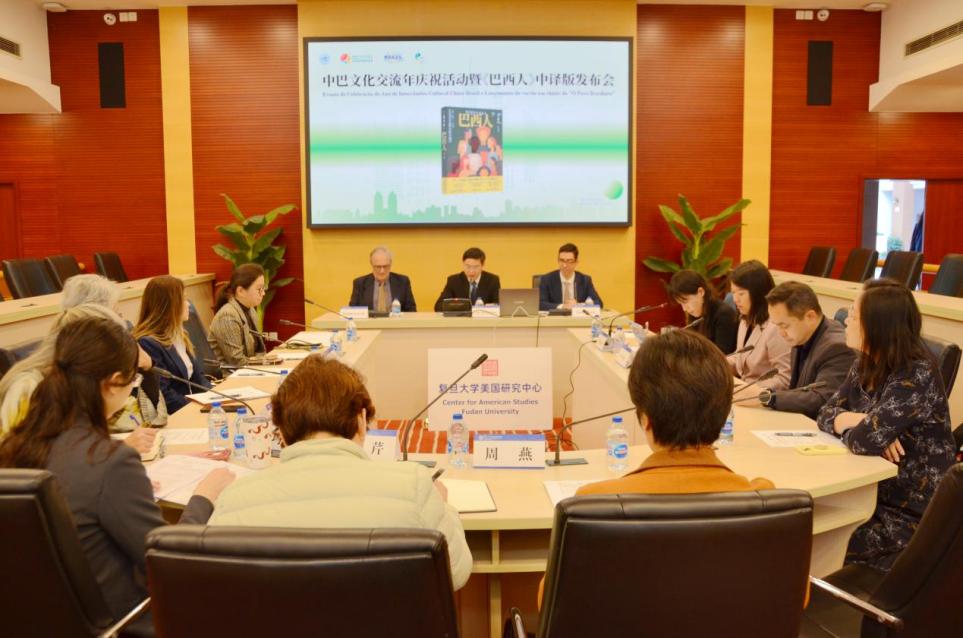
[Opening remarks]
[Book donation ceremony]
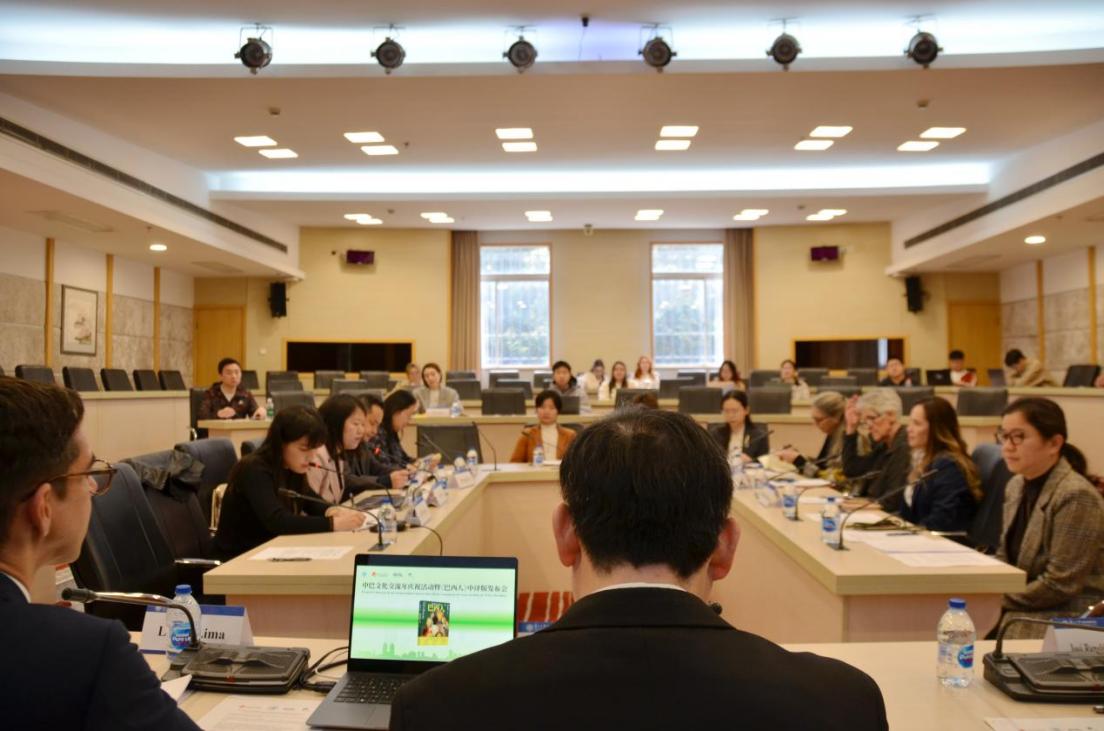
A documentary on Darcy Ribeiro and his scholarly thought was screened. Yan Qiaorong — translator of the Chinese edition and Director of the China-Brazil Media and Communication Research Center at the Academy of Regional and Country Communication, Communication University of China — then introduced the book's scholarly background and shared her experience of translating it. José Ronaldo Alves da Cunha, President of the Darcy Ribeiro Foundation, and Gisele Jacon de Araújo Moreira, the Foundation's Vice-President, spoke about Ribeiro's intellectual legacy and the value of his anthropological work. In the discussion that followed, Professor Zheng Yu of SIRPA, Associate Research Fellow Tu Yichao of the Center for American Studies, and Research Fellow Zhou Yan of the Fudan Development Institute addressed, respectively, Brazil's international relations theory, its religious culture, and the characteristics of its local culture.
[The event]
Cao Ting, Director of the Center for Latin American Studies, and Lucas Lima, Cultural Consul of Brazil in Shanghai, each delivered closing remarks. The event drew faculty, students, and other participants from a range of institutions, including Fudan University, Tongji University, East China Normal University, Shanghai University, and China Daily.
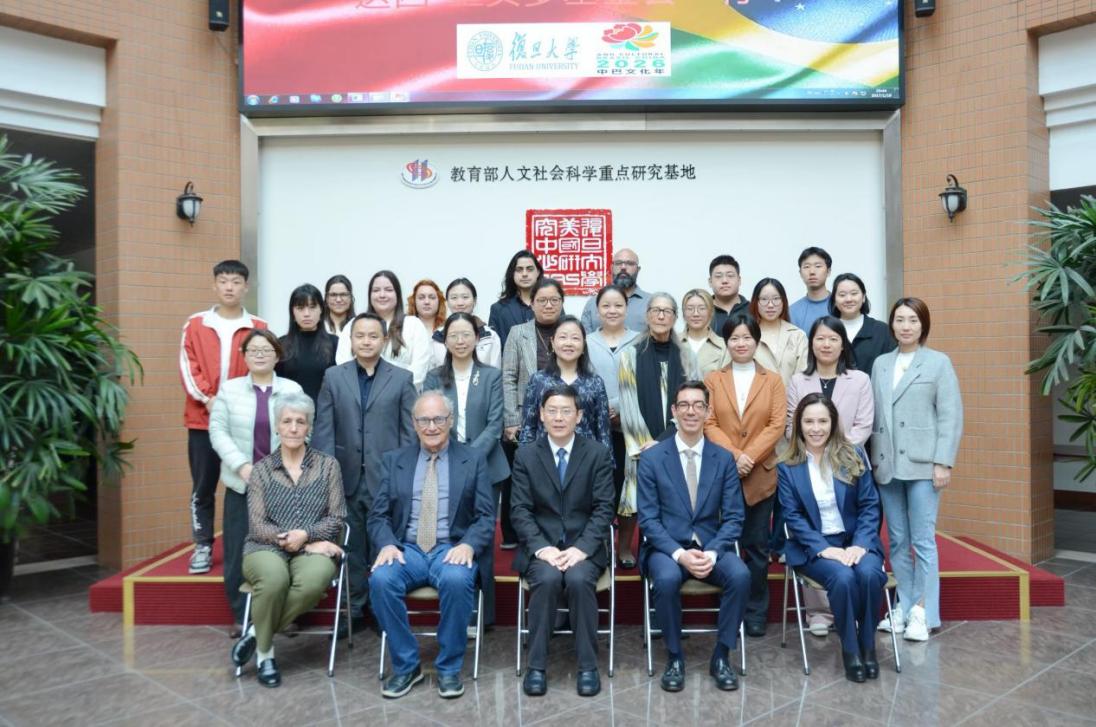
[Group photo of participants]